
Pregnancy is a journey filled with excitement, expectations, and many questions about childbirth. One of the most common concerns among expecting parents is whether the baby will be delivered naturally or through a caesarean section. While vaginal delivery is possible for many women, certain pregnancy complications may make a C-section a more suitable option.
Understanding when a C-section is recommended can help women prepare for childbirth and discuss their concerns with their obstetrician. If you are searching for a maternity hospital in Mohali, learning about different delivery methods can also help you make informed decisions about pregnancy care.
What Is a Caesarean Section?
A caesarean section, commonly known as a C-section, is a surgical procedure used to deliver a baby through an incision in the mother’s abdomen and uterus. It may be planned before labour begins or performed during labour when medical circumstances require a change in the delivery plan.
A C-section is not necessarily an indication that something has gone wrong during pregnancy. In some situations, it is planned because vaginal delivery may involve additional risks. In other cases, the decision is made after monitoring the mother and baby during labour.
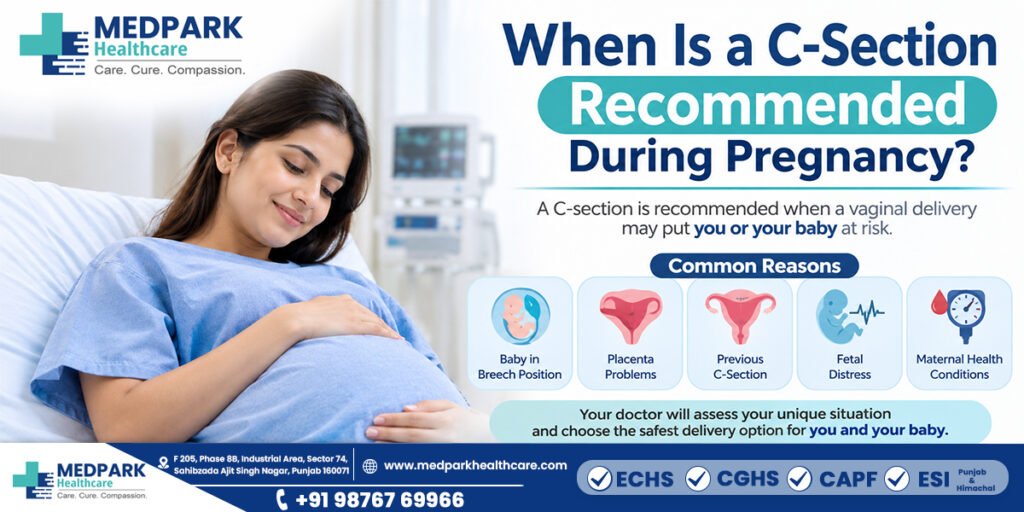
The choice of delivery method depends on several factors, including the mother’s health, the baby’s position, pregnancy complications, and how labour progresses.
When Do Doctors Recommend a C-Section During Pregnancy?
A caesarean delivery may be recommended for different medical reasons. The following are some common situations in which an obstetrician may consider a C-section.
1. Placenta Previa
Placenta previa is a condition in which the placenta covers the opening of the cervix partially or completely. Since the placenta may block the baby’s passage through the birth canal, vaginal delivery may not be safe.
This condition can also cause bleeding during pregnancy or labour. If the placenta continues to cover the cervix near the time of delivery, a planned C-section is generally recommended.
Women diagnosed with placenta previa require regular medical assessment and careful delivery planning.
2. Baby Is in a Breech Position
Normally, most babies move into a head-down position before delivery. However, some babies remain in a breech position, meaning their buttocks or feet are positioned toward the birth canal.
Depending on the baby’s position and other pregnancy-related factors, vaginal delivery may not be suitable.
In selected cases, doctors may discuss a procedure called external cephalic version, which attempts to turn the baby into a head-down position. If the baby remains breech and vaginal delivery is considered unsafe, a C-section may be recommended.
3. Previous Caesarean Delivery
Women who have undergone a C-section during an earlier pregnancy may have questions about their next delivery.
A previous caesarean does not automatically mean that every future delivery must also be surgical. Some women may be suitable for vaginal birth after caesarean, commonly known as VBAC.
However, a repeat C-section may be advised depending on the previous uterine incision, medical history, current pregnancy complications, and other risk factors.
Discussing delivery options with an obstetrician well before the expected delivery date can help women understand the possible benefits and risks.
4. Baby Shows Signs of Distress During Labour
During labour, healthcare providers monitor the baby’s heart rate to assess how well the baby is responding to contractions.
Sometimes, changes in the baby’s heart rate may indicate that the baby is not tolerating labour adequately. If concerning changes continue despite appropriate measures, the doctor may recommend an emergency C-section.
The decision depends on the baby’s condition, the progress of labour, and whether vaginal delivery can be achieved safely within the required time.
5. Labour Does Not Progress Normally
Labour usually progresses through different stages as the cervix opens and the baby moves down through the birth canal.
In some cases, labour may become prolonged or stop progressing. This can happen when the cervix does not dilate adequately, the baby does not descend, or contractions are not effective enough.
Doctors assess the progress of labour before deciding whether additional measures are appropriate or whether a C-section is necessary.
A caesarean may be recommended when labour fails to progress despite appropriate management.
6. Multiple Pregnancy
Pregnancies involving twins or more babies may require additional monitoring and delivery planning.
Some women carrying twins can deliver vaginally, depending on the position of the babies and other clinical factors. However, a C-section may be recommended when the first baby is not positioned head-down, when complications develop, or when vaginal delivery is considered unsuitable.
The obstetrician evaluates the pregnancy carefully to determine the most appropriate delivery method.
7. Certain Maternal Health Conditions
Some medical conditions affecting the mother may influence the delivery plan.
For example, certain serious heart conditions, specific pregnancy-related complications, or particular medical circumstances may make labour unsuitable or increase the risks associated with vaginal delivery.
Not every health condition requires a C-section. The decision depends on the mother’s overall health, the severity of the condition, and the baby’s well-being.
8. Umbilical Cord Prolapse
Umbilical cord prolapse is an uncommon but serious complication in which the umbilical cord slips ahead of the baby through the cervix.
When this happens, pressure on the cord can reduce the supply of oxygen to the baby. Emergency medical attention is required, and an urgent C-section may be necessary if vaginal delivery cannot be performed immediately and safely.
Planned C-Section and Emergency C-Section: What Is the Difference?
A C-section can be planned in advance or performed unexpectedly during pregnancy or labour.
Planned C-section
A planned caesarean is scheduled when the obstetrician identifies a medical reason for surgical delivery before labour begins. This gives the healthcare team time to prepare the mother, arrange necessary assessments, and explain the procedure.
Emergency C-section
An emergency caesarean may become necessary when an unexpected complication develops during labour or pregnancy. Examples include concerning changes in the baby’s heart rate, significant bleeding, or umbilical cord prolapse.
The urgency of the procedure depends on the medical circumstances. The healthcare team determines how quickly delivery needs to take place.
How Should Women Prepare for a C-Section?
Preparing for a caesarean delivery involves both physical and emotional readiness. Before the procedure, the medical team usually reviews the mother’s pregnancy history, current health, and relevant investigations.
The preparation process may include:
- Reviewing medical records and pregnancy reports.
- Checking blood pressure and other vital signs.
- Discussing anaesthesia and pain management.
- Explaining the surgical procedure and obtaining consent.
- Providing instructions regarding food, fluids, and medications.
- Planning postoperative monitoring and newborn care.
Most planned C-sections are performed under spinal or epidural anaesthesia, allowing the mother to remain awake during delivery while pain is controlled. General anaesthesia may be required in certain circumstances.
Recovery After a C-Section
Recovery following a C-section takes time because the procedure involves abdominal surgery. The duration of recovery varies according to the mother’s health, the circumstances of delivery, and individual healing.
After delivery, healthcare providers may advise mothers to:
- Take prescribed medicines as directed.
- Keep the surgical incision clean and dry.
- Begin gentle movement as advised by the medical team.
- Avoid strenuous activities during early recovery.
- Attend postpartum follow-up appointments.
- Seek medical attention for fever, severe pain, heavy bleeding, or wound-related concerns.
Emotional support, breastfeeding assistance, and guidance regarding newborn care can also help mothers during the recovery period.
Choosing the Right Maternity Hospital in Mohali
Pregnancy care involves much more than preparing for delivery. Regular antenatal consultations, monitoring the baby’s growth, identifying complications, and planning childbirth are important parts of a healthy pregnancy journey.
When choosing a maternity hospital in Mohali, expecting parents may consider the availability of obstetric consultations, delivery facilities, anaesthesia services, emergency care arrangements, and newborn assessment facilities.
It is also helpful to choose a healthcare facility where women can discuss their concerns openly and understand the available delivery options.
Pregnancy and Maternity Care at MedPark Hospital, Mohali
MedPark Hospital, Mohali, provides obstetrics and gynecology services for women seeking pregnancy-related consultations and maternity care.
Expectant mothers can consult healthcare professionals regarding pregnancy monitoring, delivery planning, and medical concerns that may arise during pregnancy.
The appropriate delivery method is determined according to the mother’s health, the baby’s condition, and individual medical requirements.
For information about obstetrics and gynecology services, visit:
Website: https://medparkhealthcare.com/service/obstetrics-and-gynecology/
Contact: +91 98767 69966
Address: F205, Phase 8-B, Sector 74, Mohali, S.A.S. Nagar, Punjab – 160071
Conclusion
A C-section may be recommended during pregnancy or labour when medical conditions make vaginal delivery unsuitable or when surgical delivery is considered safer for the mother or baby.
Placenta previa, breech presentation, certain previous caesarean deliveries, fetal distress, and complications during labour are some situations that may influence this decision.
Medical Disclaimer: This article is intended for general educational purposes. It does not replace professional medical advice, diagnosis or treatment. Consult a qualified doctor for individual health concerns.
Follow MedPark Hospital on Google
Stay updated with our latest health articles and hospital news.