

The kidneys play an important role in keeping the body healthy. They remove waste products and excess fluid from the blood, balance minerals and help regulate blood pressure. When the kidneys are unable to perform these functions properly, waste and fluid can build up in the body.
In advanced kidney disease, dialysis may be recommended to perform some of the functions normally carried out by healthy kidneys. However, not every person with kidney disease needs dialysis. The decision depends on kidney function, symptoms, test results and overall health.
If you are searching for a dialysis centre in Mohali, understanding when dialysis becomes necessary can help you recognise the warning signs and seek timely medical advice.
What Is Dialysis?
Dialysis is a medical treatment that helps remove waste products and excess fluid from the blood when the kidneys cannot do so adequately. It also helps maintain the balance of certain minerals and chemicals in the body.
There are two main types of dialysis:
1. Haemodialysis
In haemodialysis, blood is passed through a special filter in a dialysis machine. The filter removes waste products and excess fluid before the cleaned blood is returned to the body. Treatment is usually provided at a hospital or dialysis centre according to an individual treatment schedule.
2. Peritoneal Dialysis
Peritoneal dialysis uses the lining inside the abdomen, called the peritoneum, as a natural filter. A special fluid is introduced into the abdominal cavity through a catheter. Waste products and excess fluid pass into this fluid, which is later drained.
The appropriate method depends on the patient’s medical condition, lifestyle and doctor’s recommendation.
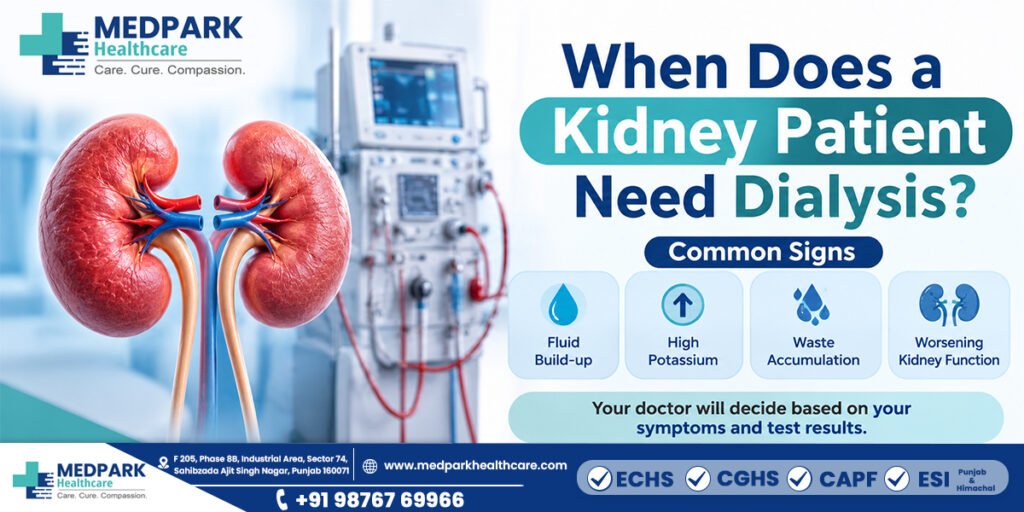
When Does a Kidney Patient Need Dialysis?
Dialysis is generally considered when the kidneys can no longer maintain the body’s essential functions adequately. Doctors assess several factors before recommending it.
Some situations in which dialysis may be needed include:
1. Advanced Kidney Disease
In advanced chronic kidney disease, kidney function gradually decreases. When the kidneys are unable to remove enough waste and fluid, dialysis may become necessary.
An estimated glomerular filtration rate (eGFR) helps doctors assess kidney function. However, dialysis is not started based on one eGFR reading alone. Symptoms, complications, laboratory results and the patient’s overall condition are also considered.
2. Excess Fluid in the Body
When the kidneys cannot remove excess fluid, it may accumulate in the body. This can cause swelling in the feet, ankles, legs or face.
Fluid accumulation can also affect the lungs and cause breathing difficulties. If the condition cannot be controlled with medication and other treatment, dialysis may be required.
3. High Potassium Levels
The kidneys help maintain potassium levels in the blood. Poor kidney function can lead to dangerously high potassium levels, a condition known as hyperkalaemia.
Severe hyperkalaemia can affect the heart’s electrical activity and may cause serious complications. In certain cases, dialysis is needed to remove excess potassium.
4. Build-Up of Waste Products
When kidney function declines, waste products such as urea can accumulate in the blood. This may lead to symptoms associated with uraemia, including:
- Persistent nausea or vomiting
- Loss of appetite
- Unusual tiredness or weakness
- Itching
- Difficulty concentrating
- Changes in sleep patterns
When these problems become severe and cannot be adequately managed through other treatment, doctors may recommend dialysis.
5. Severe Acidosis
Healthy kidneys help maintain the body’s acid-base balance. Advanced kidney disease can cause acid to accumulate in the blood, leading to metabolic acidosis.
If the condition is severe or does not respond to medical treatment, dialysis may be considered.
Warning Signs That Should Not Be Ignored
People with kidney disease should pay attention to changes in their health. Some warning signs that require medical assessment include:
- Noticeably reduced urine output
- Swelling in the feet, ankles or face
- Persistent nausea or vomiting
- Unusual weakness or fatigue
- Shortness of breath
- Loss of appetite
- Difficulty concentrating
These symptoms do not always mean that dialysis is required. However, they may indicate worsening kidney function or another medical problem that needs attention.
Severe breathing difficulty, chest pain, confusion or a sudden deterioration in health requires urgent medical evaluation.
Which Tests Help Doctors Decide Whether Dialysis Is Needed?
Doctors use a combination of tests and clinical assessments to understand how well the kidneys are working.
Common investigations include:
Serum Creatinine: Measures creatinine levels in the blood. Increased levels may indicate reduced kidney function.
Estimated Glomerular Filtration Rate (eGFR): Provides an estimate of how effectively the kidneys filter blood.
Blood Urea: Helps assess the accumulation of waste products in the bloodstream.
Electrolyte Tests: Measure minerals such as potassium and sodium, which are important for normal body functions.
Urine Tests: Help identify protein, blood or other abnormalities in urine.
Ultrasound of the Kidneys: May help assess kidney size, structure and possible obstruction.
Doctors consider these findings alongside symptoms, medical history and physical examination before deciding on treatment.
Is Dialysis Always a Lifelong Treatment?
Not necessarily. The duration of dialysis depends on the underlying kidney condition.
For some patients with acute kidney injury, dialysis may be needed temporarily until kidney function improves. For people with advanced chronic kidney disease, dialysis may be required over a longer period.
In selected patients with kidney failure, a kidney transplant may be another treatment option. A nephrologist can explain the suitable options based on the patient’s health and eligibility.
When Should You Visit a Dialysis Centre in Mohali?
People diagnosed with chronic kidney disease should maintain regular follow-ups with a kidney specialist. Early medical assessment can help monitor changes in kidney function and plan treatment when required.
Consider consulting a doctor if you experience persistent swelling, reduced urine output, unexplained weakness, breathing difficulties or other concerning changes, particularly if you already have kidney disease.
If you are looking for a dialysis centre in Mohali, choose a facility where your condition can be assessed by qualified medical professionals and your treatment plan can be based on your individual needs.
Dialysis Care at MedPark Hospital, Mohali
MedPark Hospital provides dialysis-related care in Mohali. Patients with kidney-related concerns can seek medical guidance and an assessment of their condition.
The need for dialysis, the appropriate treatment method and the frequency of sessions should always be determined by the treating doctor after reviewing the patient’s medical condition and investigation reports.
For information about dialysis treatment at MedPark Hospital, visit the hospital or contact the team.
Website: https://medparkhealthcare.com
Contact: +91 9876769966
Frequently Asked Questions
1. At what stage of kidney disease is dialysis required?
Dialysis is commonly considered in advanced kidney disease, but the stage alone does not determine when treatment should begin. Doctors assess symptoms, complications, blood test results and overall health.
2. Does a high creatinine level mean dialysis is necessary?
No. A high creatinine level may indicate reduced kidney function, but it does not automatically mean dialysis is required. The doctor considers other test results and the patient’s clinical condition.
3. Can dialysis be temporary?
Yes. Some patients with acute kidney injury need dialysis temporarily while their kidneys recover. Patients with advanced chronic kidney disease may require ongoing dialysis.
4. How often does a patient need haemodialysis?
The frequency depends on the patient’s condition and treatment plan. Many patients receiving maintenance haemodialysis have sessions several times a week, but the treating nephrologist determines the schedule.
5. Where can I find a dialysis centre in Mohali?
Patients looking for a dialysis centre in Mohali can contact MedPark Hospital to enquire about dialysis-related care and medical assessment. The appropriate treatment plan should be discussed with the treating doctor.
Medical Disclaimer: This article is intended for general educational purposes. It does not replace professional medical advice, diagnosis or treatment. Consult a qualified doctor for individual health concerns.
Follow MedPark Hospital on Google
Stay updated with our latest health articles and hospital news.