

Gallstones are sometimes discovered during an ultrasound performed for an unrelated health concern. While some people have no symptoms, others experience abdominal pain, nausea or vomiting, particularly after meals.
A common question following a gallstone diagnosis is whether surgery is necessary. The answer depends on several factors, including the symptoms, location of the stones and whether complications have developed.
Not every person with gallstones needs an operation. However, recurring pain or certain complications may require medical or surgical treatment. If you are exploring options for gallstone treatment in Mohali, understanding when surgery becomes necessary can help you have a more informed discussion with your doctor.
What Are Gallstones?
The gallbladder is a small organ located beneath the liver. It stores bile, a digestive fluid that helps break down fats.
Gallstones are hardened deposits that form inside the gallbladder. They can vary in size, and a person may have one stone or several.
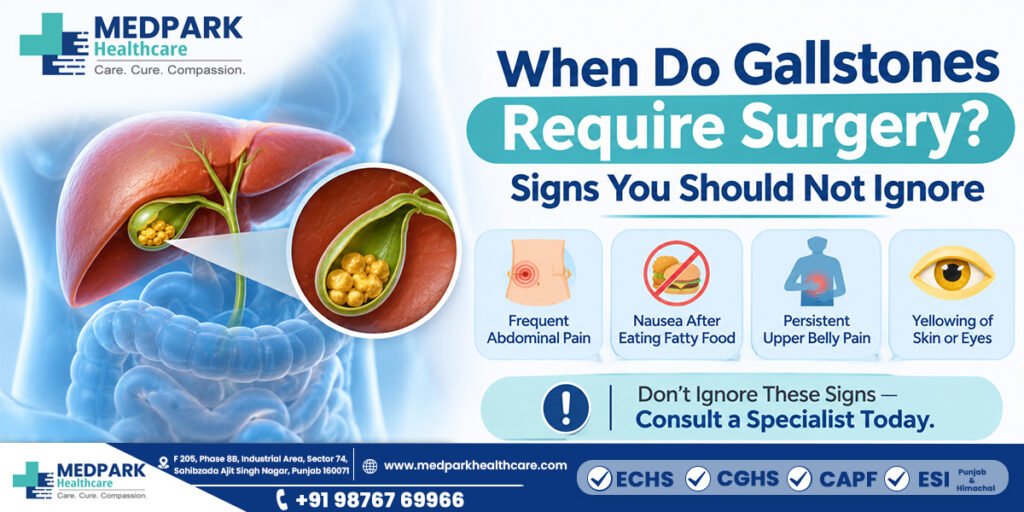
They commonly develop when substances in bile, such as cholesterol or bilirubin, form solid deposits. Some gallstones remain harmless, while others can block the flow of bile and cause symptoms.
When Do Gallstones Require Surgery?
Surgery is generally considered when gallstones cause repeated symptoms or lead to complications. A doctor evaluates the patient’s condition, medical history and investigation reports before recommending treatment.
The following situations may indicate that surgery needs to be considered.
1. Repeated Pain in the Upper Abdomen
One of the common symptoms of gallstones is pain in the upper-right side of the abdomen, just below the ribs. Some people experience discomfort in the centre of the upper abdomen.
The pain may:
- Occur after eating, particularly following a fatty meal.
- Last from several minutes to a few hours.
- Spread towards the back or right shoulder.
- Return in separate episodes.
This type of pain is often called biliary colic. When gallstones cause repeated painful episodes, a surgeon may recommend removing the gallbladder.
2. Inflammation of the Gallbladder
A gallstone can block the opening through which bile leaves the gallbladder. If the blockage continues, inflammation may develop. This condition is known as acute cholecystitis.
Possible warning signs include:
- Persistent pain in the upper-right abdomen.
- Fever or chills.
- Nausea and vomiting.
- Tenderness around the gallbladder area.
Acute cholecystitis requires prompt medical assessment. Treatment may involve hospital care, fluids, antibiotics when indicated and surgery, depending on the patient’s condition.
3. A Stone Blocking the Bile Duct
Sometimes a gallstone moves from the gallbladder into the common bile duct and becomes stuck. This can interfere with the normal flow of bile.
Symptoms may include yellowing of the eyes or skin, dark urine, pale stools, itching and abdominal pain.
A blocked bile duct can lead to infection or other complications. A procedure called ERCP may be used to remove stones from the duct. Gallbladder removal may also be recommended when appropriate.
4. Pancreatitis Caused by Gallstones
Gallstones can sometimes block the opening shared by the bile duct and pancreatic duct. This may trigger inflammation of the pancreas, known as acute pancreatitis.
Symptoms can include severe upper abdominal pain, pain spreading towards the back, nausea and repeated vomiting.
Gallstone-related pancreatitis needs hospital assessment. Once the patient is stable, the treating team may recommend gallbladder removal to reduce the risk of another episode.
Do All Gallstones Need Surgery?
No. If gallstones are found during an ultrasound and the person has no related symptoms or complications, immediate surgery may not be necessary.
The doctor may recommend observation and explain which symptoms should prompt a consultation.
The decision should not be based on stone size alone. The location of the stones, symptoms, medical history and overall health are also important.
What Happens During Gallstone Surgery?
The commonly performed operation for symptomatic gallstones is called a cholecystectomy. It involves removing the gallbladder.
In many cases, the procedure is performed using a laparoscopic technique.
Laparoscopic Gallbladder Removal
During laparoscopic surgery, the surgeon makes a few small cuts in the abdomen. A camera and specialised instruments are used to remove the gallbladder.
Compared with open surgery, laparoscopic surgery may offer:
- Smaller surgical incisions.
- Less postoperative discomfort for many patients.
- A shorter hospital stay in uncomplicated cases.
- A quicker return to routine activities for many patients.
The suitability of this technique depends on the patient’s condition and surgical findings. In certain situations, open surgery may be required.
How to Find a Gallstone Specialist in Mohali?
Choosing a doctor for gallstone-related concerns starts with getting an accurate diagnosis. A gallstone specialist in Mohali can assess your symptoms, review ultrasound findings and determine whether observation, further investigations or surgery may be appropriate.
During your consultation, discuss:
- How frequently you experience abdominal pain.
- Whether you have fever, vomiting or jaundice.
- Your ultrasound and blood test reports.
- Any existing medical conditions or medicines.
- The available treatment options and their possible risks.
Do not delay consultation if symptoms are recurring or becoming more severe.
Can You Live Without a Gallbladder?
Yes. Most people can live a normal life without a gallbladder.
After its removal, the liver continues to produce bile. Instead of being stored in the gallbladder, bile flows directly into the small intestine.
Some people experience temporary digestive changes, such as loose stools, particularly after eating fatty foods. Many gradually return to their usual eating habits. Your doctor can guide you about diet and recovery after surgery.
How Are Gallstones Diagnosed?
A doctor may recommend investigations to confirm the presence of gallstones and check for complications.
Common tests include:
- Abdominal ultrasound: Helps identify gallstones and assess the gallbladder.
- Blood tests: May help detect inflammation, infection or changes involving the liver and pancreas.
- MRCP: A specialised MRI scan that helps examine the bile ducts.
- Additional investigations: May be recommended if a bile duct blockage or another complication is suspected.
The tests required depend on the symptoms and initial examination.
When Should You Seek Medical Attention?
Do not ignore persistent or severe abdominal pain, especially when it occurs with fever, vomiting or jaundice.
Seek urgent medical attention if you experience:
- Severe or persistent upper abdominal pain.
- Fever along with abdominal pain.
- Yellowing of the eyes or skin.
- Repeated vomiting.
- Dark urine with pale stools.
These symptoms may indicate a complication that needs prompt medical care.
Gallstone Surgery in Mohali at MedPark Hospital
A gallstone diagnosis does not automatically mean that surgery is required. The first step is to understand whether the stones are causing symptoms or affecting the normal functioning of the gallbladder and bile ducts.
At MedPark Hospital, Mohali, patients can consult a doctor for gallstone-related concerns and discuss suitable treatment options. Depending on the medical assessment, care may involve observation, further investigations or surgery.
If you are looking for gallstone surgery in Mohali, a consultation can help you understand the procedure, its suitability and the expected recovery process.
MedPark Hospital, Mohali
Website: https://medparkhealthcare.com
Contact: +91 9876769966
Location: Sector 74, Mohali, Punjab
Frequently Asked Questions
1. Can gallstones go away without surgery?
Gallstones generally do not disappear on their own. However, people without symptoms may not need immediate treatment. A doctor can advise whether observation or another approach is appropriate.
2. Is surgery necessary for small gallstones?
Not necessarily. The need for surgery depends on symptoms, stone location and complications rather than size alone.
3. How long does gallbladder surgery take?
The duration varies depending on the patient’s condition and the complexity of the procedure. Your surgeon can explain the expected timeline and recovery.
4. Can gallstones cause pain after eating?
Yes. Gallstone-related pain may occur after meals, particularly fatty meals. However, abdominal pain after eating can have other causes, so medical evaluation is important.
5. Can gallstones return after gallbladder removal?
Gallbladder stones cannot recur in an organ that has been removed. However, stones can sometimes remain in or develop in the bile ducts. New symptoms should be assessed by a doctor.
Final Thoughts
Not every person diagnosed with gallstones needs surgery. Some people may only require observation, while recurring pain, gallbladder inflammation, bile duct blockage or pancreatitis may call for further treatment.
Medical Disclaimer: This article is intended for general educational purposes. It does not replace professional medical advice, diagnosis or treatment. Consult a qualified doctor for individual health concerns.
Follow MedPark Hospital on Google
Stay updated with our latest health articles and hospital news.