
Digestive problems such as acidity, heartburn, chest burning, and acid reflux are often ignored by many people because they are considered common health issues. While occasional acidity may not be serious, persistent symptoms that continue for months or years can sometimes indicate an underlying condition known as hiatal hernia. Many patients continue taking antacids regularly without realizing that the actual problem may require proper medical evaluation and treatment.
A hiatal hernia can gradually affect digestion, eating habits, sleep quality, and overall comfort if not treated on time. The condition may start with mild acidity but can eventually lead to severe reflux, chest discomfort, swallowing difficulties, and long-term irritation of the food pipe.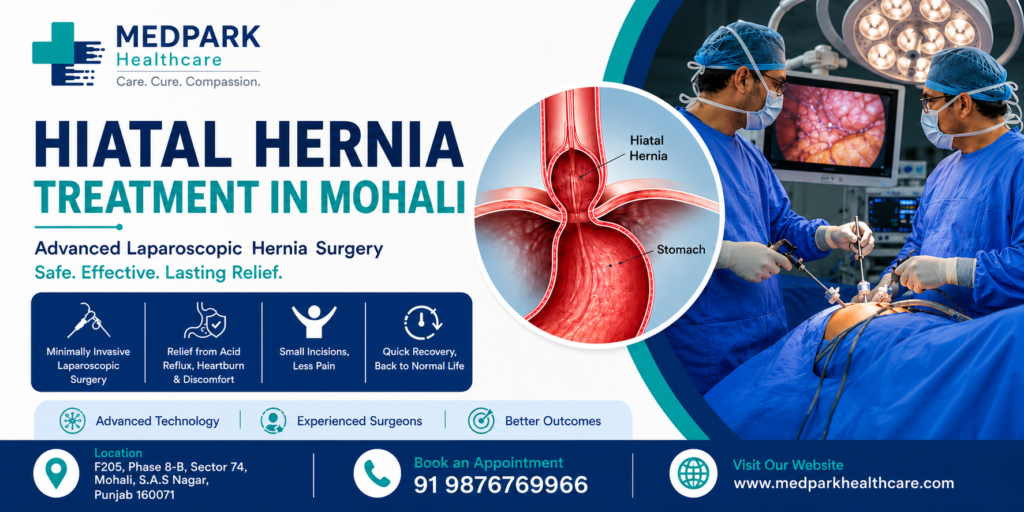
At MedPark Hospital, patients receive advanced hiatal hernia treatment in Mohali with expert medical care, modern diagnostic facilities, and minimally invasive surgical options. Patients looking for an experienced hiatal hernia specialist Mohali can benefit from accurate diagnosis, personalized treatment plans, and advanced laparoscopic procedures designed to provide long-term relief with faster recovery.
With the availability of laparoscopic hernia surgery Mohali, treatment has become safer, less painful, and more comfortable compared to conventional open surgery methods.
What Is a Hiatal Hernia?
A hiatal hernia develops when the upper part of the stomach moves upward through a small opening in the diaphragm called the hiatus. The diaphragm is a large muscle located between the chest and abdomen that plays an important role in breathing. Normally, the stomach stays below the diaphragm while the food pipe passes through the hiatus to connect with the stomach.
When the opening in the diaphragm becomes weak or enlarged, part of the stomach can push upward into the chest cavity. This abnormal movement is known as a hiatal hernia.
In many patients, the condition develops slowly over time and may not produce symptoms in the beginning. However, as the hernia increases in size, it may interfere with the normal functioning of the digestive system and weaken the valve that prevents stomach acid from moving upward into the food pipe.
This is why hiatal hernias are commonly associated with acid reflux, chronic acidity, and gastroesophageal reflux disease (GERD).
Why Hiatal Hernia Should Not Be Ignored
Many people continue living with reflux symptoms for years because they believe acidity is a minor issue caused only by spicy food or irregular eating habits. However, long-term acid reflux can gradually damage the lining of the food pipe and lead to inflammation, ulcers, narrowing of the esophagus, and severe discomfort.
Untreated hiatal hernia may also affect sleep quality because symptoms often become worse while lying down. Patients may experience nighttime acidity, coughing, throat irritation, or disturbed sleep due to acid moving upward into the throat.
In severe cases, larger hiatal hernias may cause difficulty swallowing, chest pressure, breathing discomfort, and persistent digestive problems that interfere with daily life.
Seeking timely treatment from a qualified hiatal hernia specialist Mohali helps prevent complications and improves long-term digestive health.
Types of Hiatal Hernia
Hiatal hernias are generally classified into two major types depending on how the stomach moves through the diaphragm.
Sliding Hiatal Hernia
Sliding hiatal hernia is the most common type. In this condition, the upper portion of the stomach and the junction where the food pipe meets the stomach move upward through the diaphragm into the chest cavity.
The stomach may slide upward and downward depending on body position and abdominal pressure. This type is strongly associated with acid reflux because the normal barrier preventing acid movement becomes weak.
Many patients with sliding hernia experience chronic acidity, heartburn, and regurgitation after meals.
Paraesophageal Hiatal Hernia
This is a less common but more serious type of hiatal hernia. In paraesophageal hernia, part of the stomach pushes through the diaphragm and stays beside the food pipe.
Unlike sliding hernias, the stomach may become trapped inside the chest cavity, which can affect blood supply and create serious complications if left untreated.
Because of the risk involved, paraesophageal hernias often require closer medical monitoring and surgical treatment.
Common Causes of Hiatal Hernia
Several factors can contribute to the development of hiatal hernia. In many cases, the condition occurs because of weakening of muscles and increased pressure inside the abdomen over time.
Age-Related Muscle Weakness
As people grow older, the muscles and tissues supporting the diaphragm naturally become weaker. This makes it easier for the stomach to move upward through the hiatus opening.
For this reason, hiatal hernias are more commonly seen in middle-aged and older adults.
Obesity and Excess Weight
Excess body weight increases pressure inside the abdomen and pushes against the stomach and diaphragm continuously. This pressure increases the likelihood of hernia formation and also worsens acid reflux symptoms.
Chronic Coughing and Straining
Repeated coughing, constipation, vomiting, or heavy lifting can place excessive pressure on the abdominal muscles and diaphragm. Over time, this repeated strain weakens the hiatus opening and contributes to hernia development.
Pregnancy
Pregnancy increases pressure inside the abdomen because of the growing uterus. Hormonal changes may also relax muscles, increasing the chances of hiatal hernia and acid reflux.
Smoking and Poor Lifestyle Habits
Smoking weakens muscle function and increases acid production. Unhealthy eating patterns, consuming large meals late at night, and lying down immediately after eating may worsen both reflux and hiatal hernia symptoms.
Symptoms of Hiatal Hernia
The symptoms of hiatal hernia may vary depending on the size of the hernia and the severity of acid reflux.
Persistent Acidity and Heartburn
One of the most common symptoms is a burning sensation in the chest after eating or while lying down. Patients often experience repeated acidity that temporarily improves with antacids but returns frequently.
Acid Reflux and Sour Taste
Stomach acid may move upward into the food pipe and throat, causing regurgitation, sour taste, and throat irritation.
Chest Discomfort
Some patients experience chest pressure or discomfort, especially after heavy meals. Because chest pain may also be linked to heart-related conditions, proper medical evaluation is important.
Difficulty Swallowing
Larger hernias may affect normal swallowing and create a feeling that food is getting stuck in the chest.
Bloating and Fullness
Patients may feel bloated or excessively full even after eating small amounts of food because the stomach does not function normally.
Nighttime Symptoms
Symptoms often become worse at night while lying down. Patients may develop coughing, throat irritation, or disturbed sleep due to reflux.
Diagnosis and Evaluation at MedPark Hospital
At MedPark Hospital, doctors perform a detailed evaluation to identify hiatal hernia accurately and understand the severity of the condition.
The diagnostic process begins with understanding the patient’s symptoms, eating habits, lifestyle factors, and medical history.
Depending on the patient’s condition, investigations may include:
- Upper GI endoscopy
- Barium swallow study
- Imaging scans
- Esophageal function tests
These tests help determine the size of the hernia, evaluate acid reflux damage, and guide treatment planning.
Hiatal Hernia Treatment in Mohali at MedPark Hospital
MedPark Hospital provides complete hiatal hernia treatment in Mohali with both non-surgical and surgical treatment options depending on symptom severity and patient condition.
Lifestyle and Dietary Management
For mild hiatal hernias, doctors often recommend lifestyle modifications to reduce reflux and improve digestive health.
Patients are usually advised to:
- Avoid spicy and oily foods
- Eat smaller meals
- Maintain healthy body weight
- Avoid lying down immediately after eating
- Stop smoking
- Reduce caffeine intake
These changes help reduce pressure on the stomach and improve symptom control naturally.
Medications for Acid Control
Doctors may prescribe medications to reduce stomach acid production and relieve heartburn symptoms. These medicines help protect the food pipe from acid-related irritation and improve patient comfort.
However, medications mainly control symptoms and may not permanently repair larger hernias.
Laparoscopic Hernia Surgery Mohali – Advanced Minimally Invasive Treatment
For severe reflux symptoms or large hiatal hernias, laparoscopic hernia surgery Mohali offers an advanced and highly effective treatment option.
Laparoscopic surgery is performed using small incisions, specialized instruments, and a tiny camera. During the procedure, the stomach is repositioned into its normal location and the weakened diaphragm opening is repaired carefully.
Benefits of Laparoscopic Surgery
Less Pain and Smaller Scars
Because laparoscopic surgery uses small incisions, patients experience less pain and minimal scarring compared to open surgery.
Faster Recovery
Most patients recover more quickly and return to normal activities within a shorter period.
Reduced Hospital Stay
Minimally invasive surgery usually requires a shorter hospital stay and faster healing.
Lower Risk of Complications
Smaller wounds reduce the chances of infection, bleeding, and postoperative complications.
Long-Term Relief from Reflux
Laparoscopic repair helps control acid reflux effectively and improves long-term digestive comfort.
Why Choose MedPark Hospital?
MedPark Hospital is committed to delivering advanced healthcare with experienced specialists, modern infrastructure, and patient-focused treatment. Patients searching for a trusted hiatal hernia specialist Mohali receive comprehensive care from diagnosis to recovery.
The hospital emphasizes patient safety, modern surgical technology, hygiene, and personalized treatment to achieve the best possible outcomes.
Conclusion
Hiatal hernia can gradually affect digestive health, eating habits, and daily comfort if ignored for a long time. Symptoms such as chronic acidity, heartburn, reflux, and chest discomfort should never be neglected.
At MedPark Hospital, patients receive advanced hiatal hernia treatment in Mohali with expert medical support and modern treatment facilities. With advanced laparoscopic hernia surgery Mohali, patients can now benefit from minimally invasive treatment, faster recovery, reduced pain, and long-term relief.
Timely treatment and healthy lifestyle habits can help patients improve digestive health and return to a more comfortable and healthier life.