
The arrival of a baby is a moment filled with happiness, but sometimes a newborn may need additional medical attention immediately after birth. Premature delivery, low birth weight, breathing difficulties, infections or other health concerns can require close observation and specialised neonatal care.
In such situations, parents need a hospital where their baby can receive timely medical attention in a safe and supportive environment. A Neonatal Intensive Care Unit, commonly called a NICU, is designed to provide specialised care to newborns who need continuous monitoring or treatment.
For families searching for the Best NICU hospital in Mohali, MedPark Hospital provides dedicated medical care for newborns who require closer observation and specialised support.
What Is a NICU?
A Neonatal Intensive Care Unit is a specialised hospital unit for newborn babies who need more medical support than can be provided in a regular nursery.
Some babies may need NICU care immediately after birth, while others may be transferred to the unit if their condition changes during the first few hours or days of life.
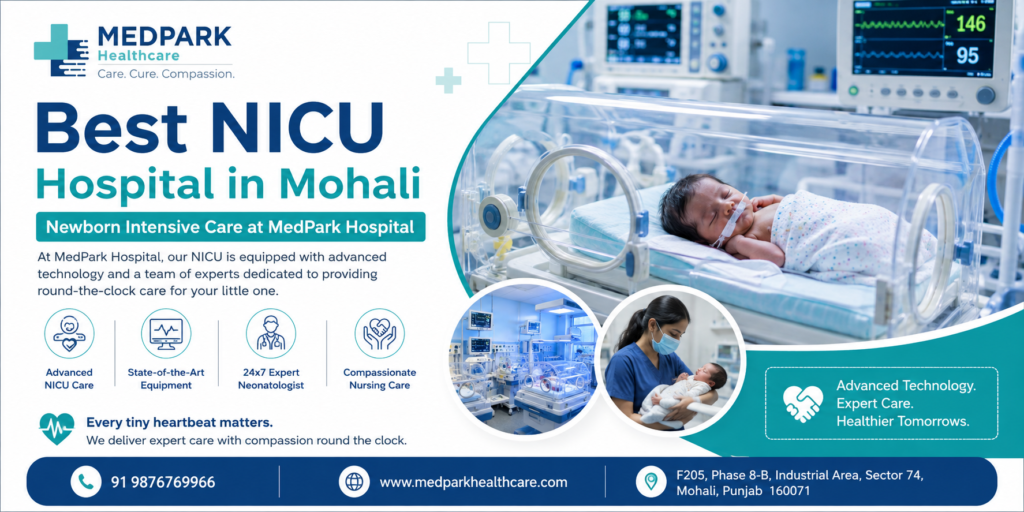
The medical team may closely monitor breathing, heart rate, oxygen levels, temperature, blood sugar and other important parameters depending on the baby’s condition.
The purpose of NICU care is not only to treat an immediate health problem but also to provide the support a newborn may need while developing the ability to feed, breathe and maintain body temperature independently.
Which Babies May Need NICU Care?
NICU admission depends on the baby’s individual medical condition. Doctors may recommend specialised neonatal care for babies with conditions such as:
-
- Premature birth
-
- Low birth weight
-
- Breathing difficulties
-
- Difficulty maintaining normal body temperature
-
- Suspected or confirmed infection
-
- Feeding difficulties
-
- Low blood sugar
-
- Certain complications following delivery
-
- Need for close observation after a complicated birth
-
- Certain congenital or medical conditions
A baby does not necessarily need intensive care simply because they were born prematurely or with low birth weight. The decision is made by the treating medical team after assessing the baby’s overall health.
Why Is Early Newborn Care Important?
Newborn babies can respond differently to illness compared with older children and adults. Some medical problems may develop quickly, which is why timely assessment can be important.
A newborn who has difficulty breathing, is unable to feed properly, has unusual sleepiness, develops signs of infection or shows other concerning symptoms should be assessed by a qualified medical professional.
Early evaluation allows doctors to determine whether the baby requires observation, routine treatment or specialised neonatal care.
Specialised Care for Premature Babies
Premature babies are born before completing the normal period of pregnancy and may need additional support after birth.
Depending on their gestational age and medical condition, premature babies may have difficulty regulating body temperature, feeding effectively or breathing without assistance.
NICU care can provide an environment where these babies can be monitored closely while they gradually become stronger.
The care provided is individualised because every premature baby has different needs. Some may require only observation and feeding support, while others may need respiratory assistance or treatment for specific medical conditions.
Support for Low-Birth-Weight Newborns
Birth weight is one of the factors doctors consider when assessing a newborn’s health. Babies with a low birth weight may require additional monitoring, particularly if they have difficulty maintaining body temperature, feeding or blood sugar levels.
The neonatal team can assess the baby’s condition and determine what level of support is appropriate.
Regular monitoring can help doctors identify changes early and adjust the baby’s care according to their progress.
Breathing Support for Newborns
Breathing problems are among the reasons some newborns require specialised neonatal care.
A baby may experience breathing difficulty because of prematurity, infection, complications during delivery or other medical conditions.
The medical team assesses the baby’s breathing and oxygenation before deciding what support is needed. Depending on the situation, treatment may range from close observation to respiratory support.
The aim is to maintain adequate oxygenation while addressing the underlying cause of the breathing problem.
Managing Feeding Difficulties
Feeding can sometimes be challenging for premature or unwell newborns. Babies who are not yet able to coordinate sucking, swallowing and breathing effectively may require additional feeding support.
The medical team evaluates the baby’s ability to feed and monitors factors such as weight, hydration and nutritional requirements.
As the baby’s condition improves, feeding can gradually be adjusted according to medical advice.
Monitoring and Treatment of Newborn Jaundice
Jaundice is common among newborn babies and often improves with appropriate monitoring. However, bilirubin levels can become high in some babies and may require medical evaluation and treatment.
Doctors may recommend bilirubin testing and other assessments depending on the baby’s age and symptoms.
When treatment is required, the medical team selects the appropriate approach based on the baby’s clinical condition and bilirubin levels.
Infection Care in Newborns
Newborn babies can be vulnerable to infections, particularly when they have certain risk factors or symptoms.
If an infection is suspected, doctors may recommend clinical evaluation, laboratory investigations and appropriate treatment.
Babies who require closer observation can be monitored in a specialised neonatal setting so that changes in their condition can be identified promptly.
What Should Parents Look for in a NICU Hospital?
Choosing a hospital for neonatal care can be difficult, especially when parents are already worried about their baby’s health.
When evaluating a NICU, families may consider factors such as:
-
- Availability of specialised neonatal care
-
- Qualified paediatric and neonatal medical support
-
- Trained nursing staff
-
- Continuous monitoring facilities
-
- Access to diagnostic services
-
- Emergency medical support
-
- Infection-control measures
-
- Care for premature and low-birth-weight babies
-
- Communication between doctors and parents
-
- Coordination with other hospital departments
Parents should also discuss their baby’s specific condition with their obstetrician or paediatrician before deciding on the most appropriate care facility.
NICU Care at MedPark Hospital, Mohali
MedPark Hospital is committed to providing coordinated medical care for patients across different specialties. When a newborn requires specialised attention, timely assessment and appropriate neonatal management become especially important.
The neonatal care team focuses on monitoring the baby’s condition, identifying medical concerns and providing treatment based on individual requirements.
Parents are also an important part of the care process. Understanding why a baby needs NICU care and what treatment is being provided can help families feel more informed during a stressful period.
Every newborn is different, so the type and duration of care depend on factors such as gestational age, birth weight, symptoms and response to treatment.
A Supportive Environment for Parents
Having a baby admitted to the NICU can be emotionally difficult for parents. They may have many questions about their baby’s health, treatment and recovery.
Clear communication between parents and the medical team can make the experience easier to understand.
Parents should feel comfortable asking questions about their baby’s condition, investigations, treatment plan, feeding, expected progress and discharge requirements.
The medical team can provide information based on the baby’s individual circumstances rather than relying on general expectations.
When Should You Seek Medical Attention for a Newborn?
Parents should seek prompt medical evaluation if a newborn shows concerning symptoms such as:
-
- Difficulty breathing
-
- Bluish or unusually pale skin
-
- Poor feeding
-
- Excessive sleepiness or difficulty waking
-
- Fever or unusually low body temperature
-
- Repeated vomiting
-
- Seizures or abnormal movements
-
- Signs of infection
-
- Reduced activity
-
- Significant worsening of jaundice
Newborns can become unwell quickly, so concerning symptoms should not be ignored. Immediate medical assessment is important when a baby’s condition appears abnormal.
Why MedPark Hospital Can Be Considered for NICU Care in Mohali
When looking for the Best NICU hospital in Mohali, families need more than a name. They need access to appropriate medical expertise, monitoring, supportive hospital services and a team that understands the special requirements of newborn babies.
MedPark Hospital, Mohali, provides a hospital-based approach to patient care with access to multiple medical specialties and supporting services.
The focus is on timely assessment, appropriate treatment and careful monitoring while keeping parents informed throughout their baby’s care journey.
Conclusion
A newborn may sometimes require specialised medical care during the first few hours or days of life. Prematurity, low birth weight, breathing problems, infections and feeding difficulties are some of the situations in which NICU care may be recommended.
Choosing an appropriate hospital can help ensure that the baby receives the required medical attention and monitoring.
For families looking for the Best NICU hospital in Mohali, MedPark Hospital offers specialised newborn care with an emphasis on timely medical assessment, monitoring and family communication.
If your baby has been advised NICU admission or is showing signs of illness, consult a qualified paediatric or neonatal specialist promptly. The appropriate treatment depends on the baby’s individual medical condition and should always be determined by the treating medical team.