

Many people ignore itching, discomfort or slight bleeding around the anus, hoping the problem will settle on its own. Sometimes, these changes are linked to piles, a condition that can make everyday activities such as sitting and passing stools uncomfortable.
Piles, medically called haemorrhoids, develop when blood vessels in and around the lower rectum become enlarged and swollen. They are quite common, but the symptoms can differ from person to person. Some individuals experience occasional bleeding, while others develop painful swelling or a lump near the anal opening.
Knowing what to look for can help you avoid unnecessary discomfort and seek medical advice at the right time. If you are considering piles treatment in Mohali, it is useful to understand how the condition develops and which treatment options may be suitable.
What Exactly Are Piles?
Piles are enlarged blood vessels in the lower rectum or around the anus. These tissues normally help control bowel movements, but they can become swollen when repeated pressure affects the surrounding blood vessels.
Doctors generally classify piles into two categories.
Internal piles: These develop inside the rectum. They often do not cause pain, but bleeding during bowel movements is a common complaint. Larger internal piles may sometimes protrude through the anal opening.
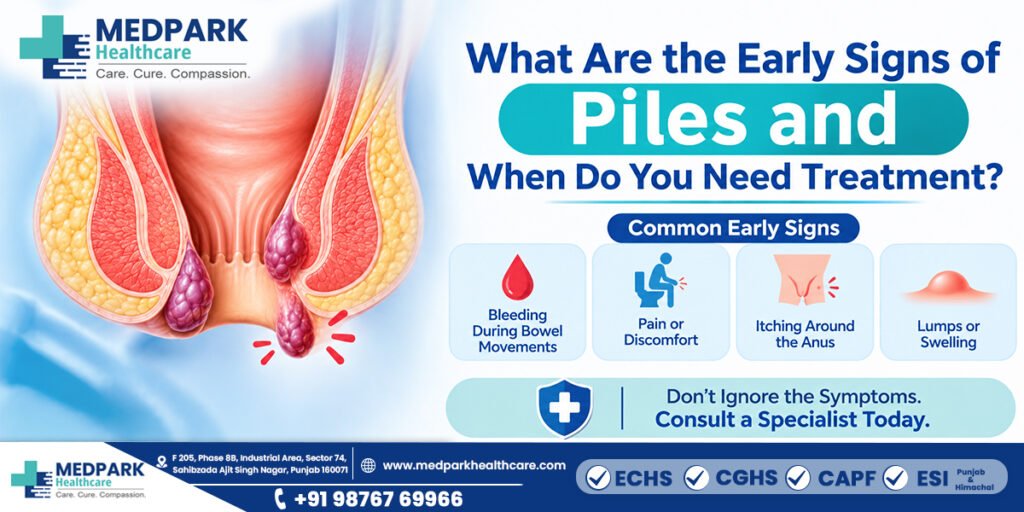
External piles: These form beneath the skin around the anus. They can cause itching, tenderness, swelling and pain. If a blood clot develops inside an external pile, the area may become particularly painful.
The type of piles and the severity of symptoms help determine the appropriate treatment.
What Are the First Signs That You May Have Piles?
Piles do not always begin with severe pain. In many cases, the first changes are relatively mild and may become more noticeable over time.
Here are some signs worth paying attention to.
1. Bright Red Blood After Passing Stools
Seeing blood on toilet paper or in the toilet bowl can be worrying. Bright red bleeding during or after a bowel movement is one possible sign of piles.
It may happen when swollen internal haemorrhoids become irritated during the passage of stools.
However, rectal bleeding should never be assumed to be piles without an examination. Anal fissures and other bowel conditions can produce similar symptoms.
2. Itching and Irritation Around the Anus
An uncomfortable itching sensation around the anal opening may occur when piles cause mucus discharge or make the area difficult to clean properly.
Repeated scratching can further irritate the skin. Keeping the area clean and dry may provide some comfort, but ongoing itching needs medical attention.
3. A Small Lump Near the Anal Opening
Some people discover a small swelling or lump while bathing or cleaning the anal area.
This may be an external pile. It can feel soft or tender, and the discomfort may increase during bowel movements.
A sudden, painful lump can sometimes indicate a blood clot within an external haemorrhoid. Avoid pressing or trying to treat the lump yourself.
4. Discomfort While Sitting
Sitting for long periods may become uncomfortable when external piles are swollen or irritated.
Some people also notice tenderness after using the toilet. If the pain is severe or does not improve, a doctor should examine the affected area.
5. A Feeling of Incomplete Bowel Emptying
Internal piles may sometimes create a sensation that the bowel has not emptied completely.
This can be particularly noticeable when enlarged haemorrhoids protrude towards the anal opening.
Persistent changes in bowel habits should be investigated rather than automatically attributed to piles.
6. Mucus or Moisture Around the Anal Area
Some internal haemorrhoids produce mucus, which may cause dampness, irritation or discomfort around the anus.
If the discharge continues or occurs with pain, swelling or bleeding, consult a doctor to identify the underlying problem.
Why Do People Develop Piles?
Piles usually develop because of increased pressure on the blood vessels around the lower rectum and anus. Certain daily habits and health conditions can contribute to this pressure.
Some common contributing factors include:
Frequent constipation: Hard stools can make bowel movements difficult and encourage repeated straining.
Not eating enough fibre: A diet low in fruits, vegetables and whole grains may contribute to constipation.
Spending too much time on the toilet: Sitting for extended periods, particularly while straining, can increase pressure around the anal region.
Pregnancy: Increased abdominal pressure and hormonal changes during pregnancy can contribute to haemorrhoids.
Age-related changes: Supporting tissues around the rectum may become weaker with age, making haemorrhoids more likely.
Long-term diarrhoea: Frequent bowel movements can irritate the anal area and contribute to symptoms.
Understanding these factors can help patients make changes that support better bowel health.
When Should You See a Doctor for Piles?
Not every case of piles requires surgery. Mild symptoms may improve with suitable dietary changes and medical guidance. However, delaying an examination when symptoms continue is not advisable.
You should arrange a medical consultation if you notice:
- Blood during or after bowel movements.
- Repeated itching or irritation around the anus.
- A lump or swelling near the anal opening.
- Pain that makes sitting or daily activities uncomfortable.
- Piles that repeatedly come out during bowel movements.
- Constipation accompanied by ongoing discomfort.
- Symptoms that continue despite home care.
Heavy bleeding, fainting, dizziness, black stools or severe anal pain require prompt medical assessment.
An early examination helps establish whether the problem is actually piles and whether another condition needs attention.
How Do Doctors Diagnose Piles?
A proper diagnosis is important because several conditions can cause similar symptoms.
The doctor will usually begin by asking about your bowel habits, bleeding pattern, pain and medical history.
Depending on the symptoms, the examination may include:
- Physical examination: Checking the area around the anus for visible swelling, lumps or irritation.
- Digital rectal examination: Examining the lower rectum with a gloved and lubricated finger when appropriate.
- Anoscopy: Using a small instrument to examine the anal canal and identify internal haemorrhoids.
- Further investigations: A colonoscopy may be advised in selected cases to investigate unexplained bleeding or other bowel concerns.
The doctor decides which examinations are necessary based on the patient’s symptoms, age and medical history.
What Treatment Options Are Available for Piles?
Treatment depends on the size of the haemorrhoids, the symptoms and whether previous treatments have helped.
1. Changes in Diet and Daily Habits
For mild piles, improving bowel habits is often an important part of management.
Eating more fibre-rich foods, drinking adequate water and avoiding straining can help make stools easier to pass.
Doctors may also recommend avoiding long periods on the toilet and taking warm sitz baths to relieve irritation.
2. Medicines and Non-Surgical Procedures
Depending on the condition, a doctor may recommend stool-softening medicines, suitable topical preparations or other treatments to manage symptoms.
Some internal haemorrhoids can be treated with rubber band ligation. In this procedure, a small band is placed around the base of the haemorrhoid to reduce its blood supply.
The procedure is suitable only for selected cases, following medical assessment.
3. Surgical Treatment
When piles are large, repeatedly bleed, remain outside the anus or cause persistent discomfort, surgery may be considered.
One established surgical option is haemorrhoidectomy, which involves removing the enlarged haemorrhoidal tissue.
The choice of procedure depends on the type and severity of piles, the patient’s health and the surgeon’s assessment. Surgery is not necessary for everyone with haemorrhoids.
What Changes Can Help Reduce the Risk of Piles?
Daily bowel habits have an important role in maintaining anal health. A few practical changes may reduce constipation and unnecessary pressure during bowel movements.
- Include vegetables, fruits and whole grains in your meals.
- Drink sufficient water throughout the day.
- Stay physically active.
- Avoid sitting on the toilet longer than necessary.
- Do not ignore the natural urge to pass stools.
- Avoid repeated straining during bowel movements.
- Seek advice if constipation or diarrhoea becomes persistent.
These steps may help reduce the chances of recurring symptoms, although they cannot prevent every case of piles.
Get Piles Evaluated at MedPark Hospital, Mohali
Bleeding, itching and anal swelling can be uncomfortable to discuss, but they deserve proper medical attention. Finding the actual cause is important because not every case of rectal bleeding is related to piles.
MedPark Hospital, Mohali, provides general and laparoscopic surgery services for patients requiring assessment of piles and other surgical conditions.
If you are searching for piles treatment in Mohali, consult a qualified doctor to discuss your symptoms and understand the available medical or surgical options.
MedPark Hospital, Mohali
Address: F205, Phase 8-B, Sector 74, Mohali, Punjab 160071
Contact: +91 9876769966
Frequently Asked Questions
1. How do piles usually start?
Piles may begin with mild itching, irritation or occasional bright red bleeding during bowel movements. Some people also notice a small lump near the anus.
2. Can piles improve without surgery?
Yes. Many mild cases improve with dietary changes, better bowel habits and appropriate medical treatment. Surgery is considered when symptoms are severe or other treatments have not worked.
3. Is bleeding during bowel movements always caused by piles?
No. Bleeding may also occur due to anal fissures and other digestive or bowel conditions. A doctor should identify the actual cause.
4. Can constipation make piles worse?
Yes. Repeated straining and passing hard stools can increase pressure around the anal blood vessels and aggravate existing haemorrhoids.
5. Are internal and external piles different?
Yes. Internal piles develop inside the rectum and commonly cause painless bleeding. External piles form under the skin around the anus and may cause swelling, itching and pain.
6. When is surgery needed for piles?
Surgery may be recommended when piles cause persistent bleeding, significant pain, prolapse or symptoms that do not improve with other treatment options.
7. Which specialist should I consult for piles?
A general surgeon or colorectal surgeon can examine the condition and recommend suitable treatment based on its severity.
Medical Disclaimer: This article is intended for general educational purposes. It does not replace professional medical advice, diagnosis or treatment. Consult a qualified doctor for individual health concerns.
Follow MedPark Hospital on Google
Stay updated with our latest health articles and hospital news.