

Noticing blood after a bowel movement, feeling irritation around the anus or experiencing discomfort while sitting can be worrying. These problems are sometimes linked to piles, also called haemorrhoids.
For many people, the first concern after a diagnosis is whether an operation will be necessary. The good news is that surgery is not the only way to manage piles. Depending on the condition, some patients improve with changes to their daily habits, medicines or treatments that do not involve conventional surgery.
So, can piles actually be treated without surgery? In many cases, yes. The important thing is to understand what is causing the symptoms and how advanced the condition is.
If you are exploring options for piles treatment in Mohali, here is what you should know before deciding on a treatment approach.
Why Do Piles Develop?
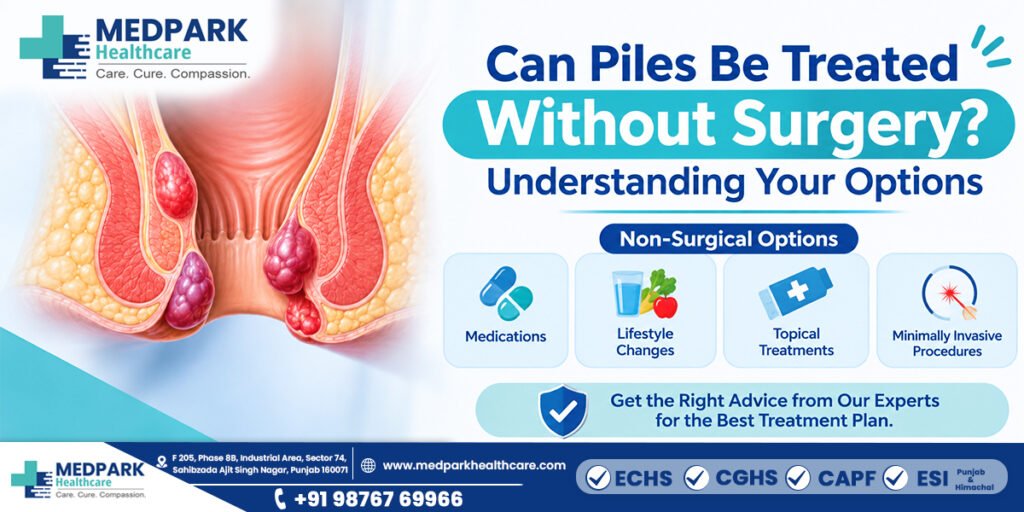
Piles are enlarged or swollen blood vessels located in the lower rectum or around the anus. They can develop when pressure increases in these blood vessels over time.
Some common contributing factors include:
- Frequent constipation and hard stools
- Straining while passing stool
- Spending too much time sitting on the toilet
- A diet that lacks sufficient fibre
- Pregnancy and increased pressure in the pelvic area
- Long periods of sitting and limited physical activity
Piles can affect people of different age groups. Their symptoms and severity, however, are not the same for everyone.
Is Surgery Always Necessary for Piles?
No. The treatment depends on the size, location and severity of the haemorrhoids, along with the symptoms a person experiences.
In the early stages, symptoms may settle with changes in eating habits, better bowel routines and medicines prescribed by a doctor. If these measures are not enough, certain procedures can treat selected types of piles without conventional surgery.
More advanced or persistent cases may need a surgical approach. This is why an examination is important before choosing a treatment.
Treatment Options That May Help Without Surgery
1. Improve Your Daily Diet
What you eat can have a direct effect on bowel movements. Hard stools often lead to straining, which can increase pressure around the anus and aggravate piles.
Adding more fibre to meals can help make stools softer and easier to pass. Consider including:
- Seasonal fruits such as papaya, pears and apples
- Vegetables, especially green leafy varieties
- Whole grains and oats
- Lentils, beans and other pulses
- Nuts and seeds
Make dietary changes gradually and drink enough water. If you have a medical condition that requires fluid or dietary restrictions, ask your doctor before making changes.
2. Do Not Ignore the Urge to Pass Stool
Delaying bowel movements can make stools harder and more difficult to pass. Try to follow a regular toilet routine and avoid forcing a bowel movement.
Another useful habit is to avoid sitting on the toilet for longer than necessary. Reading or using a mobile phone while sitting on the toilet may unintentionally extend the time spent there.
Small changes in daily routine can help reduce unnecessary pressure.
3. Use Medicines Only When Recommended
A doctor may prescribe medicines depending on the symptoms. These could include stool softeners, fibre supplements or preparations to reduce local irritation and discomfort.
Some creams and ointments provide temporary relief from itching or swelling. However, they may not address the underlying problem. Products containing steroids should not be used for extended periods without medical guidance.
It is better to get examined rather than repeatedly treating symptoms on your own.
4. Try a Warm Sitz Bath for Comfort
A warm sitz bath is a simple method that may ease irritation around the anal area.
To try one, sit in a clean basin or bathtub containing a few inches of comfortably warm water for approximately 10 to 15 minutes. Avoid hot water, which can irritate the skin.
This approach may provide temporary comfort, but it does not remove piles or replace medical treatment when it is needed.
5. Consider Office-Based Procedures
When dietary changes and medicines do not provide enough relief, a specialist may discuss a minimally invasive procedure. These treatments are generally considered for selected cases, particularly certain internal haemorrhoids.
Some available options include:
Rubber Band Ligation
A small elastic band is placed around the base of an internal haemorrhoid. This reduces its blood supply, allowing the treated tissue to shrink and eventually fall away. It is not suitable for every type of piles.
Sclerotherapy
In this procedure, a medical solution is injected into the haemorrhoid. The treatment causes changes in the tissue that help reduce its size.
Infrared Coagulation
A specialist uses infrared energy to create controlled changes in the affected tissue. This can help shrink certain internal haemorrhoids.
Each procedure has its own indications and limitations. A doctor will consider the patient’s condition before recommending one.
When Might Piles Require Surgery?
Some patients continue to experience problems even after trying non-surgical treatments. In such situations, surgery may be discussed.
A surgical approach may be considered when:
- Haemorrhoids are large or frequently protrude outside the anus.
- Bleeding continues or keeps returning.
- Symptoms remain troublesome despite appropriate treatment.
- External piles cause recurring or severe discomfort.
- The condition significantly interferes with everyday activities.
Surgery is not automatically required in advanced cases either. The decision should be based on a proper examination and discussion of the available options.
Can Piles Return After Treatment?
Yes, symptoms can come back. Treatment may reduce existing haemorrhoids or control discomfort, but it does not always remove the factors that contributed to their development.
For example, ongoing constipation, straining and poor bowel habits can increase the likelihood of future problems.
To support recovery and reduce the chance of recurrence, try to maintain a fibre-rich diet, stay physically active, drink adequate water and follow your doctor’s instructions.
When Should You See a Doctor?
Do not assume that every episode of rectal bleeding is caused by piles. Other conditions can produce similar symptoms, so an examination is important.
Arrange a medical consultation if you notice:
- Blood during or after bowel movements
- Repeated itching or irritation around the anus
- A lump or swelling near the anal opening
- Pain or discomfort while passing stool
- Symptoms that continue or keep returning
Heavy bleeding, fainting, dizziness, black or tarry stools, or severe pain require prompt medical attention.
Consult a Doctor for Piles Treatment in Mohali
Living with piles can affect everyday comfort, but delaying an examination because of fear of surgery is not necessary. Several treatment approaches may be available, depending on the diagnosis.
At MedPark Hospital, Mohali, patients can consult a doctor for an assessment of piles-related symptoms and discuss suitable treatment options. These may include lifestyle advice, medication, minimally invasive procedures or surgery, depending on individual medical needs.
MedPark Hospital, Mohali
Contact: +91 9876769966
Location: Sector 74, Mohali, Punjab
Frequently Asked Questions
1. Can piles disappear without an operation?
Some mild cases improve with dietary changes, better bowel habits and appropriate medical care. Larger or persistent haemorrhoids may need a procedure or surgery.
2. How do I know if my piles are serious?
Persistent bleeding, significant pain, prolapsing tissue or symptoms that do not improve should be assessed by a doctor. The severity cannot be reliably determined from symptoms alone.
3. Are medicines enough to cure piles?
Medicines can help control discomfort, itching and constipation. However, they may not remove larger haemorrhoids. The result depends on the type and severity of the condition.
4. Is laser treatment required for piles?
No. Laser treatment is not necessary for everyone. The most appropriate option depends on the clinical assessment and the patient’s individual needs.
5. Can lifestyle changes prevent piles from returning?
Healthy bowel habits may lower the risk of recurrence. Eating enough fibre, drinking adequate water, avoiding straining and staying active can all help.
Conclusion
Piles treatment does not always mean surgery. For some people, changes to diet and daily habits, along with medicines, may be enough to manage the condition. Others may benefit from minimally invasive procedures, while more persistent cases may require surgery.
Rather than choosing a treatment based on assumptions, get the symptoms examined and discuss the options with a qualified doctor. Early assessment can help identify the problem and guide the next steps.
Medical Disclaimer: This article is intended for general educational purposes and does not replace professional medical advice, diagnosis or treatment.
Follow MedPark Hospital on Google
Stay updated with our latest health articles and hospital news.