

Piles can develop either outside or inside the anal canal, depending on where the swollen blood vessels occur. External piles develop beneath the skin around the anus and may cause pain, swelling, itching, or a noticeable lump. In comparison, internal piles develop inside the rectum and may commonly cause bleeding or discomfort during bowel movements. While the symptoms and treatment approaches can differ, internal piles treatment also depends on the severity of the condition and the patient’s individual symptoms. Understanding these differences can help patients recognise their symptoms and seek appropriate medical evaluation.
Piles are a common problem that can cause considerable discomfort, yet many people delay seeking medical advice because they feel hesitant to talk about symptoms affecting the anal area. Piles, also called haemorrhoids, occur when the blood vessels and surrounding tissues in the lower rectum or anus become swollen.
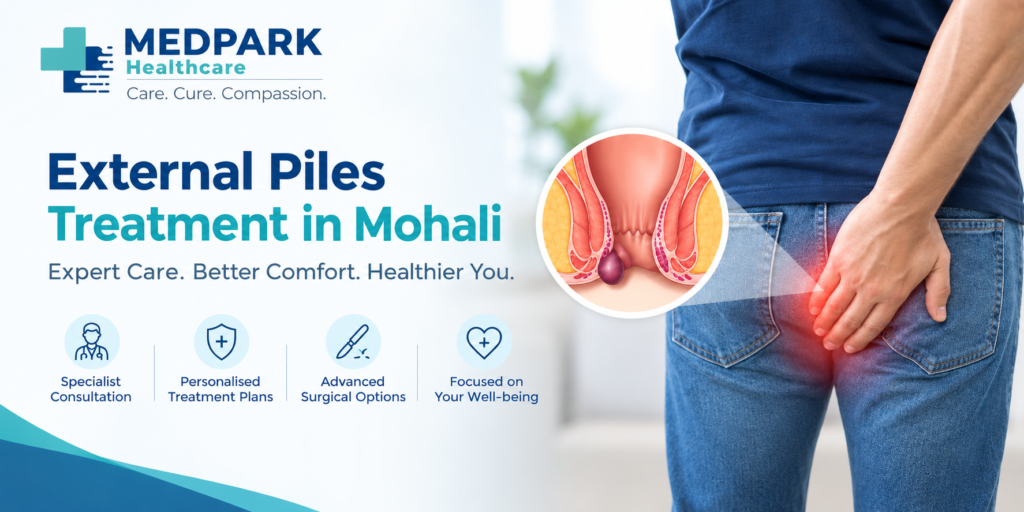
When the swelling develops underneath the skin around the anus, it is generally referred to as external piles. Depending on the condition, a person may notice pain, tenderness, itching, swelling or a lump near the anal opening. Some people may also experience bleeding, particularly during bowel movements.
The good news is that piles can often be managed with appropriate treatment and changes in bowel habits. However, treatment should be based on the cause and severity of the problem. Persistent symptoms should be evaluated by a qualified specialist rather than treated through self-diagnosis.
For people looking for external piles treatment Mohali, MedPark Hospital provides consultation and treatment options based on the individual patient’s condition.
What Are External Piles?
External piles form beneath the skin surrounding the anus. Because they are located close to the surface, they can sometimes be felt or seen as a small swelling or lump.
The symptoms can range from mild irritation to significant pain. In some cases, a blood clot can form inside an external haemorrhoid. This is known as a thrombosed external haemorrhoid and may cause a firm lump accompanied by sudden or intense pain.
The appearance of a lump around the anus does not always mean that a person has piles. An anal fissure, fistula, abscess or another anorectal condition can produce similar symptoms. For this reason, a proper clinical assessment is important, particularly when symptoms are new, severe or persistent.
Symptoms of External Piles
The symptoms of external piles can differ from one person to another. Some people may notice only a small lump or occasional irritation, while others may experience pain that makes sitting or walking uncomfortable.
Possible symptoms include:
- Swelling around the anal opening
- Pain or tenderness
- Itching and irritation
- A lump that can be felt around the anus
- Discomfort while sitting
- Bleeding during or after passing stool
- Difficulty cleaning the area because of swelling or tenderness
- Sudden and severe pain when a clot develops
Bleeding from the rectum should not automatically be considered a symptom of piles. Other conditions can also cause rectal bleeding, so recurring or unexplained bleeding should be medically assessed.
Why Do External Piles Develop?
Piles usually develop because of increased pressure on the blood vessels and tissues around the anus. Several everyday habits and physical factors can contribute to this pressure.
1. Chronic Constipation
Constipation can make bowel movements difficult and may cause a person to strain repeatedly to pass hard stools. This repeated pressure can place stress on the veins and tissues around the anus.
People who regularly experience constipation may also spend more time in the toilet trying to complete a bowel movement. Over time, these habits can contribute to irritation and may worsen existing haemorrhoids.
Improving bowel habits can help. A diet containing adequate fibre, sufficient fluid intake and regular physical activity may support softer, easier-to-pass stools. If constipation continues despite these changes, it is worth discussing the problem with a doctor.
2. Spending Too Much Time Sitting
Long periods of sitting can be part of a sedentary lifestyle, particularly for people who work at a desk, drive for several hours or spend much of their day sitting.
Extended sitting may increase pressure around the pelvic and anal area. Sitting on the toilet for a long time can also place unnecessary pressure on the anal region.
Taking short movement breaks during the day, staying physically active and avoiding unnecessary time on the toilet can encourage healthier bowel habits.
3. Not Getting Enough Fibre
Fibre plays an important role in maintaining regular bowel movements. When the diet contains very little fibre, stools can become harder and more difficult to pass.
Hard stools often require greater effort during bowel movements. This can lead to repeated straining and may aggravate piles that are already present.
Vegetables, fruits, whole grains, pulses and other fibre-containing foods can be included as part of a balanced diet. Fibre intake should generally be increased gradually, along with adequate fluids, to help the digestive system adjust.
4. Pregnancy
Pregnancy can make haemorrhoids more common. As pregnancy progresses, the growing uterus can place pressure on the veins in the pelvic region. Hormonal changes can also affect digestion and contribute to constipation.
These factors, combined with increased pressure during bowel movements, may contribute to swelling around the anal area.
Pregnant women who develop pain, bleeding or significant swelling should discuss their symptoms with their doctor. Treatment and medicines during pregnancy should only be used according to appropriate medical advice.
5. Heavy Lifting
Heavy lifting can temporarily increase pressure inside the abdomen. Repeated strenuous lifting may therefore place additional stress on the blood vessels around the rectal and anal area.
This does not mean that every person who lifts weights will develop piles. However, people who already have haemorrhoids may notice increased discomfort after activities involving considerable straining.
Using appropriate lifting techniques and avoiding unnecessary breath-holding or straining during physical activity can be helpful. Persistent symptoms should still be assessed rather than being attributed solely to exercise or lifting.
6. Repeated Straining During Bowel Movements
Straining is one of the habits that can aggravate haemorrhoids. It may occur because of constipation, hard stools or the feeling that the bowel has not completely emptied.
Repeated pushing increases pressure around the anal blood vessels and may worsen existing swelling and irritation. Spending a long time trying to pass stool can add to the problem.
Developing a regular bowel routine, responding to the natural urge to use the toilet, eating enough fibre and avoiding prolonged toilet sitting can help reduce unnecessary straining.
When Should You See a Doctor?
Not every case of piles requires surgery. Mild symptoms may improve with dietary changes, better bowel habits and appropriate medical treatment.
However, professional evaluation is advisable when symptoms are persistent, recurrent or particularly uncomfortable.
You should consider consulting a specialist if you have:
- Repeated bleeding during bowel movements
- Severe or continuing anal pain
- A painful or swollen lump
- Symptoms that keep returning
- Persistent itching or irritation
- Difficulty passing stools
- Symptoms that interfere with normal activities
- No improvement despite lifestyle changes
A doctor can determine whether the symptoms are actually caused by piles and recommend treatment accordingly.
External Piles Treatment in Mohali
Treatment for external piles depends on the individual case. The size of the haemorrhoid, severity of symptoms, presence of a blood clot and overall health can all influence the treatment decision.
For less severe cases, treatment may focus on improving bowel habits and reducing the factors that contribute to irritation. Increasing dietary fibre, drinking adequate fluids, avoiding excessive straining and maintaining regular physical activity may be recommended.
Medicines or other supportive treatments may also be advised when appropriate.
When symptoms are severe, persistent or recurrent, a surgical procedure may be considered. The decision should be made after an examination rather than based solely on the patient’s preference for a particular procedure.
External Piles Surgery in Mohali
Some patients with troublesome or persistent piles may eventually require surgery. This may be considered when conservative treatment does not provide adequate relief or when the condition is causing significant problems.
There are different approaches to haemorrhoid treatment, and the most appropriate option depends on the patient’s condition. A surgeon may consider the location and size of the haemorrhoid, symptoms, previous treatment and general health before recommending a procedure.
For anyone searching for external piles surgery Mohali, it is important to have a consultation before deciding on surgery. The procedure should be selected according to the patient’s actual medical requirements.
A specialist can explain the expected recovery, possible risks, treatment alternatives and follow-up requirements before the procedure.
What About Laser Treatment for Piles?
Laser treatment has become one of the options discussed for certain haemorrhoid cases. These procedures use focused laser energy as part of the treatment approach.
However, laser treatment is not necessarily suitable for every type or stage of piles. The choice depends on the diagnosis and the patient’s individual circumstances.
Some patients may be interested in laser treatment because of its minimally invasive nature and potentially quicker recovery in selected cases. Nevertheless, patients should have realistic expectations and discuss the advantages, limitations and alternatives with their surgeon.
The important question is not simply whether laser treatment is available, but whether it is appropriate for the particular condition.
How to Choose a Hospital for Piles Treatment in Mohali
Finding a hospital for piles treatment involves more than looking for a particular procedure. Patients should consider whether the hospital has qualified surgical specialists, appropriate diagnostic facilities, operating-room support, anaesthesia services and postoperative care.
People searching for the best hospital for piles laser treatment in Mohali should also consider the quality of consultation and diagnosis before treatment. Different anorectal conditions can produce similar symptoms, and the correct diagnosis is an important part of choosing the right treatment.
At MedPark Hospital, Mohali, patients can consult specialists for evaluation of piles and related anorectal conditions. The treatment plan is based on the patient’s symptoms, examination findings and individual medical requirements.
Can Lifestyle Changes Help Prevent Piles?
Certain lifestyle habits can help support healthy bowel movements and may reduce factors associated with piles.
Include Fibre in Your Diet
Fruits, vegetables, whole grains and pulses can provide dietary fibre. Fibre helps add bulk to stool and may make bowel movements easier.
Drink Enough Fluids
Adequate fluid intake can support normal bowel function and may help prevent stools from becoming excessively hard.
Avoid Unnecessary Straining
Try not to force a bowel movement. Excessive pushing can place additional pressure on the anal area.
Limit Toilet Time
Avoid sitting on the toilet for longer than necessary. Reading or using a mobile phone while sitting on the toilet can unintentionally extend toilet time.
Stay Active
Regular physical activity can support digestion and bowel regularity. Even simple activities such as walking can be incorporated into a daily routine.
Treat Constipation Early
If constipation becomes a regular problem, addressing it early can help prevent repeated straining and discomfort.
These measures can support better bowel habits, but they should not be considered a substitute for medical care when symptoms are severe or persistent.
Why Proper Diagnosis Matters
Pain, swelling and bleeding around the anus can have several possible causes. While piles are common, they are not the only condition that can produce these symptoms.
An anal fissure, fistula, abscess or other anorectal problem may require a completely different treatment approach. This is why relying only on internet searches or self-treatment can sometimes delay appropriate care.
A specialist consultation allows the symptoms to be assessed properly and helps determine whether conservative treatment, medication, a minimally invasive procedure or surgery is appropriate.
Piles Care at MedPark Hospital, Mohali
Piles can affect everyday comfort, but there is no reason to feel embarrassed about seeking medical advice. Discussing symptoms early can help identify the underlying problem and provide an opportunity to manage it appropriately.
MedPark Hospital, Mohali, offers consultation and treatment for piles and related anorectal conditions. Treatment recommendations are made according to the patient’s clinical condition rather than using the same approach for everyone.
If you are searching for external piles treatment Mohali, external piles surgery Mohali, or the best hospital for piles laser treatment in Mohali, consulting a qualified specialist can help you understand the available options and decide on an appropriate course of treatment.