

Pelvic health plays an important role in a woman’s overall well-being, yet many women hesitate to seek help when they experience discomfort or unusual symptoms. A feeling of heaviness in the pelvis, difficulty controlling the bladder, or noticing a bulge in the vaginal area are not issues that should be ignored. These symptoms may indicate pelvic organ prolapse, a condition that can be treated successfully with the right medical care.
At MedPark Hospital, we understand that pelvic floor disorders can affect both physical and emotional health. Our experienced specialists provide advanced Pelvic Organ Prolapse Surgery and personalized treatment plans designed to help women regain comfort, confidence, and an active lifestyle.
What Is Pelvic Organ Prolapse?
Inside the pelvis, a network of muscles and connective tissues supports important organs such as the bladder, uterus, rectum, and vagina. These muscles act like a natural support system, helping the organs stay in their proper position while allowing normal bladder and bowel function.
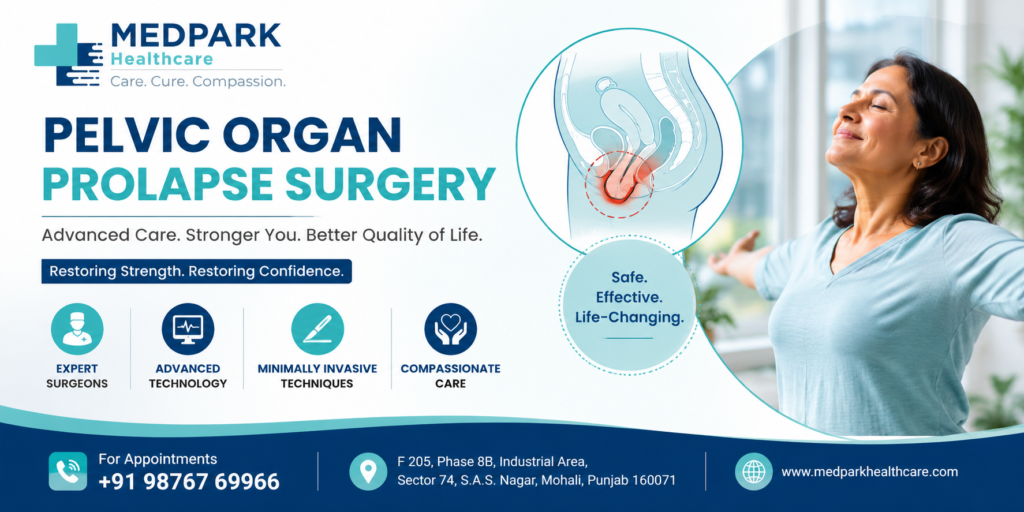
Over time, these supporting structures can weaken. When this happens, one or more pelvic organs may shift downward and press against the vaginal wall. This condition is called pelvic organ prolapse.
Pelvic organ prolapse can affect women of different age groups, although it is more common after childbirth and menopause. While it is not considered a life-threatening condition, it can become increasingly uncomfortable if left untreated.
What Causes Pelvic Organ Prolapse?
There isn’t always a single reason why pelvic organ prolapse develops. In many women, it occurs gradually after years of strain on the pelvic floor muscles.
Pregnancy and vaginal childbirth remain the most common causes because they stretch and weaken the muscles that support the pelvic organs. Hormonal changes after menopause can also reduce tissue strength, making prolapse more likely.
Other contributing factors include obesity, chronic constipation, persistent coughing, repeated heavy lifting, previous pelvic surgery, aging, and inherited weakness of connective tissues.
Understanding the underlying cause helps doctors choose the most effective treatment for each patient.
Signs That Shouldn’t Be Ignored
The symptoms of pelvic organ prolapse are different for every woman. Some experience only mild discomfort, while others find that the condition affects their daily routine.
Common symptoms include:
- A feeling of pressure or heaviness in the pelvic area
- A noticeable bulge in or around the vagina
- Difficulty emptying the bladder completely
- Frequent urination
- Urine leakage while coughing or exercising
- Constipation or difficulty passing stools
- Lower back discomfort
- Pain during sexual intercourse
- A sensation that something is slipping downward
If these symptoms continue or become more noticeable, it is advisable to seek medical evaluation rather than waiting for them to improve on their own.
When Is Pelvic Organ Prolapse Surgery Recommended?
Not every woman with pelvic organ prolapse needs surgery. Mild cases often improve with pelvic floor strengthening exercises, weight management, and supportive devices known as pessaries.
However, surgery becomes an option when symptoms become severe, affect bladder or bowel function, interfere with work or daily activities, or when non-surgical treatments no longer provide relief.
At MedPark Hospital, we recommend Pelvic Organ Prolapse Surgery only after a thorough examination and discussion of all available treatment options. Our goal is to choose the treatment that offers the best long-term outcome while matching the patient’s lifestyle and future health plans.
How Is Pelvic Organ Prolapse Diagnosed?
Every successful treatment begins with an accurate diagnosis.
During your consultation, our specialists will discuss your symptoms, medical history, pregnancies, previous surgeries, and overall health. A pelvic examination helps determine the type and severity of the prolapse.
Depending on your condition, additional investigations such as ultrasound, urine analysis, bladder function tests, or imaging studies may also be recommended.
This detailed evaluation allows our doctors to create a treatment plan that is tailored specifically to your needs.
Treatment Options for Pelvic Organ Prolapse
Treatment depends on the severity of symptoms and how much the condition affects your daily life.
Women with mild prolapse may benefit from pelvic floor exercises, lifestyle changes, and pessary therapy. These approaches can relieve symptoms and slow the progression of the condition.
When these measures are no longer effective, Pelvic Organ Prolapse Surgery offers a reliable solution.
The type of surgery varies from patient to patient. Some procedures strengthen the vaginal walls, while others restore support to the bladder, uterus, or upper part of the vagina. In suitable cases, minimally invasive laparoscopic techniques may be used, allowing smaller incisions, less discomfort, and quicker recovery.
Our specialists carefully explain every procedure, ensuring patients understand the expected benefits, recovery process, and long-term results before making a decision.
Recovery After Surgery
Recovery differs depending on the type of procedure performed and the patient’s overall health. Most women are encouraged to start walking shortly after surgery, while strenuous activities and heavy lifting should be avoided during the healing period.
Regular follow-up appointments help monitor recovery and ensure the best possible outcome. Following your doctor’s instructions regarding physical activity, wound care, and pelvic floor rehabilitation plays an important role in long-term success.
Many women notice a significant improvement in comfort, bladder control, and daily activities within a few weeks.
Why Choose MedPark Hospital?
Choosing the right hospital is an important part of successful treatment.
At MedPark Hospital, each patient receives expert care from an experienced gynecologist specializing in pelvic floor disorders. We combine advanced diagnostic technology, modern surgical techniques, and compassionate patient care to deliver the best possible outcome.
Our hospital provides personalized treatment plans, NABH-accredited facilities, advanced operation theatres, and dedicated post-operative care. Every patient is treated with respect, privacy, and a commitment to achieving lasting results.
Can Pelvic Organ Prolapse Be Prevented?
Although it may not always be possible to prevent pelvic organ prolapse, certain lifestyle habits can help maintain pelvic floor strength.
Maintaining a healthy weight, staying physically active, avoiding unnecessary heavy lifting, treating chronic constipation, managing persistent cough, and performing pelvic floor exercises regularly can all support better pelvic health.
Women should also seek medical advice if they notice pelvic pressure or bladder changes after childbirth or menopause, as early treatment often prevents the condition from progressing.
Take the First Step Towards Better Pelvic Health
Living with pelvic organ prolapse can be physically uncomfortable and emotionally challenging, but effective treatment is available. Modern Pelvic Organ Prolapse Surgery helps restore pelvic support, improve bladder and bowel function, and allow women to return to their everyday lives with greater confidence.
If you are experiencing symptoms of pelvic organ prolapse, don’t delay seeking medical care. The specialists at MedPark Hospital are here to guide you through every step of diagnosis, treatment, and recovery with compassion and expertise.