
The kidneys are vital organs that quietly perform several life-sustaining functions every day. They remove waste from the blood, maintain fluid balance, regulate blood pressure, and help keep bones and blood healthy. When kidney function gradually weakens over time, it can affect the entire body. Because the changes often occur slowly, many people are unaware of the problem until significant damage has already occurred. For patients seeking dependable Chronic Kidney Disease (CKD) treatment in Chandigarh, MedPark Hospital provides dedicated kidney care tailored to each individual’s condition. Our experienced medical team focuses on early diagnosis, careful monitoring, medication management, dialysis support, and practical lifestyle guidance to help control the progression of kidney disease. With a patient-first approach and modern medical facilities, MedPark Hospital ensures comprehensive care aimed at improving long-term kidney health and overall well-being.
Chronic Kidney Disease (CKD)
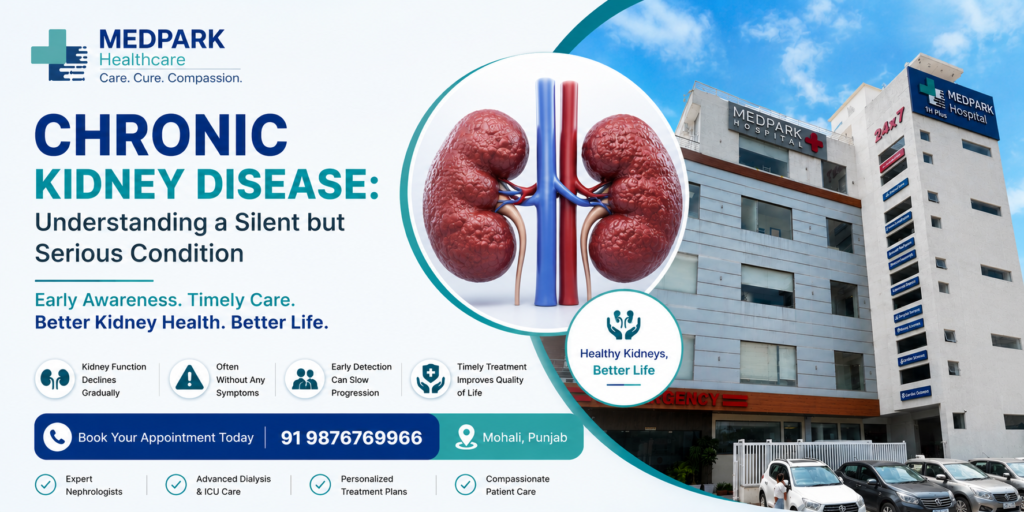
Chronic Kidney Disease (CKD) refers to a long-term decline in kidney function that develops over months or years. Unlike sudden kidney failure, this condition progresses slowly and may not cause noticeable symptoms in its early stages. As kidney performance decreases, harmful waste and excess fluids accumulate in the bloodstream, placing strain on the heart, bones, and other organs.
CKD is commonly divided into stages based on how efficiently the kidneys filter blood. Early stages may require only monitoring and lifestyle changes, while advanced stages demand more intensive medical care.
What Causes Chronic Kidney Disease?
Several health conditions and long-term habits can damage kidney tissues over time. Diabetes is the leading cause, as persistently high blood sugar damages the tiny filtering units in the kidneys. High blood pressure is another major contributor, as it places continuous pressure on delicate kidney blood vessels.
Other causes include recurring kidney infections, prolonged use of certain pain medications, autoimmune disorders, inherited kidney problems, urinary blockages, and untreated dehydration. In some individuals, multiple risk factors may work together, accelerating kidney damage.
Understanding the cause helps doctors create a targeted treatment plan to slow disease progression.
Symptoms That Should Not Be Ignored
One of the most challenging aspects of CKD is that symptoms often appear late. In the early phase, many people feel normal or experience only mild discomfort. As kidney function continues to decline, signs become more noticeable.
Common symptoms include persistent tiredness, swelling of the feet or face due to fluid retention, changes in urination patterns, loss of appetite, muscle cramps, and difficulty focusing. Some patients develop dry or itchy skin, nausea, or a metallic taste in the mouth. In advanced stages, breathlessness, severe weakness, and sleep problems may occur.
Regular health checkups are especially important for people with diabetes, hypertension, or a family history of kidney disease.
How CKD Is Diagnosed
Diagnosing chronic kidney disease involves a combination of laboratory tests and clinical evaluation. Blood tests measure waste levels such as creatinine, while urine tests detect protein leakage that signals kidney damage. Blood pressure monitoring is essential, as high readings both cause and worsen kidney disease.
Imaging studies like ultrasound may be used to examine kidney size and structure. Doctors also review medical history, medications, and lifestyle factors to determine disease stage and progression risk. Early detection allows timely intervention and better long-term outcomes.
Chronic Kidney Disease (CKD) treatment in Mohali and Chandigarh
Chronic kidney disease (CKD) treatment in Mohali and Chandigarh at Medpark Hospital focuses on slowing kidney damage, managing symptoms, and preventing complications. Treatment strategies depend on the stage of the disease and the patient’s overall health. The main goals are to preserve remaining kidney function and maintain quality of life.
Medical management may include medications to control blood pressure, regulate blood sugar, reduce fluid buildup, and correct mineral imbalances. Patients are also guided on dietary adjustments and lifestyle changes tailored to their condition. In later stages, dialysis planning and supportive care become important components of treatment.
The Role of Diet and Daily Habits
Dietary management plays a crucial role in protecting kidney function. Depending on disease stage, patients may need to adjust protein intake and limit sodium, potassium, and phosphorus. Fluid intake may also need careful control to prevent swelling and blood pressure issues.
Healthy daily habits such as maintaining a balanced weight, avoiding tobacco, staying physically active within safe limits, and managing stress support overall kidney health. Education and regular guidance help patients adapt these changes sustainably.
Importance of Ongoing Monitoring
Chronic kidney disease requires continuous observation, even when symptoms seem stable. Regular blood tests, urine analysis, and blood pressure checks allow doctors to track changes in kidney function and adjust treatment promptly. Monitoring also helps prevent complications involving the heart, bones, and nervous system.
Patient involvement, medication adherence, and scheduled follow-ups significantly influence disease outcomes.
Supportive Kidney Care at MedPark Hospital
At MedPark Hospital, kidney care is centered on early diagnosis, individualized treatment plans, and long-term patient support. With experienced doctors, modern diagnostic tools, and coordinated care services, patients receive consistent medical guidance throughout their treatment journey.
Living a Meaningful Life With CKD
Although chronic kidney disease is a lifelong condition, it does not mean life must be limited. With timely medical care, informed lifestyle choices, and ongoing support, many individuals continue to live active and fulfilling lives. Awareness, early action, and consistent treatment remain the strongest tools for managing kidney health effectively.